Aleppo Firefight Fuels Fears for SDF Deal
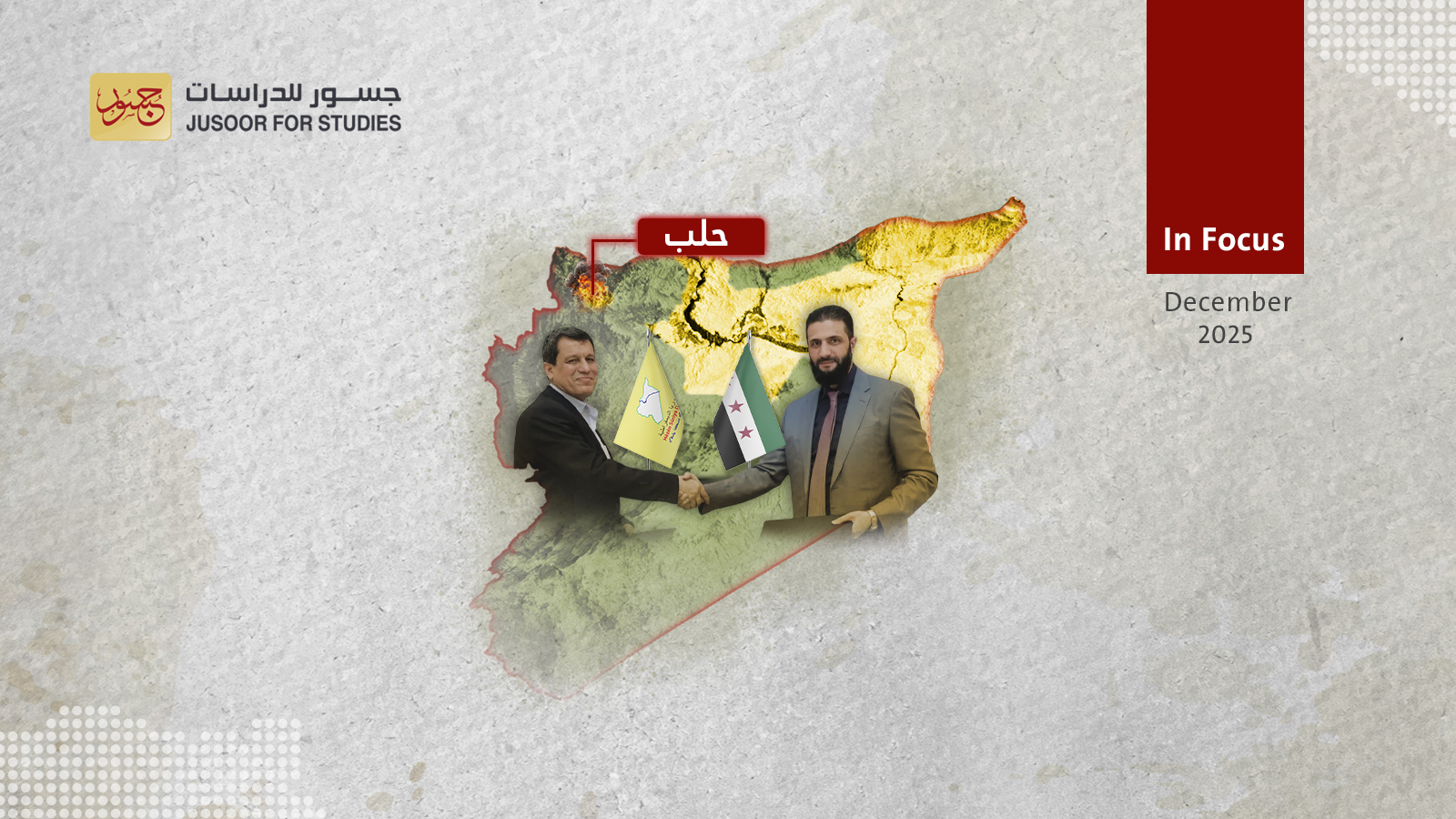
On the evening of December 22, a Syrian Democratic Forces fighter opened fire on a government military checkpoint in the Sheihan roundabout area of Aleppo, sparking major clashes in Syria’s second city.
The incident, which flared after the SDF had withdrawn from joint checkpoints at the entrances to the Sheikh Maqsoud and Ashrafieh neighborhoods, quickly degenerated into a direct gunfight involving both light arms and heavier weapons.
This was the second major escalation in Aleppo since the landmark March 10 agreement between Syrian President Ahmad al-Sharaa and SDF commander Mazloum Abdi, which sought to integrate SDF military and civilian institutions into the central state by the end of December. The two sides had engaged in violent clashes in early October, and both the SDF and the Syrian government have repeatedly violated front lines along the Euphrates River, although this has not derailed ongoing negotiations between them.
The escalation in Aleppo coincided with the visit of a high-level Turkish delegation, including the foreign and defense ministers and the head of intelligence, to Damascus. There, they discussed the fate of the March 10 agreement, whose deadline for implementation is approaching, with no progress made by either side. During his meeting with the Turkish delegation, Syrian foreign minister Asaad Al-Shaibani accused the SDF of stalling and failing to take implementation of the deal seriously.
Both the fighting and the visit both came after Turkish defense minister Yaşar Güler threatened the SDF on December 20, saying his country had plans ready to confront any development on the ground, and that the SDF knew exactly what Türkiye would do if it needed to. He added that the integration of the SDF as a complete unit into the Syrian army was unacceptable, insisting that SDF fighters must join the Syrian army individually.
That threat was a response to a proposal submitted days earlier by the SDF commander regarding the integration mechanism. Under the proposed arrangement, the SDF would maintain its military and security presence within the Syrian army, as well as its current deployments, while demanding the withdrawal of Turkish forces from northern Syria. The proposed amendment also includes provisions related to resources and governance. The Syrian government rejected the proposal, but the SDF subsequently submitted another amendment, which remains under review, the Syrian Foreign Minister said during a press conference with his Turkish counterpart the same day as the clashes in Aleppo.
While calm has returned to Syria’s second city, the risk of renewed escalation persists. It is clear that the SDF is leveraging its presence in the city, more than on other fronts, to signal to the government that its stance is not flexible. Destabilizing the key city of Aleppo—an economic hub close to the border with Türkiye, could place pressure on the government and force it to rethink its next move. Unless Damascus can alleviate this pressure, the SDF is unlikely to engage seriously in negotiations over its integration into the Syrian army.
In conclusion, as the year’s-end deadline for implementing the March 10 agreement approaches, the Syrian government—backed by Türkiye—is unlikely to accept any plan that does not lead to the dissolution of the SDF and the political project of the dominant faction in Northeastern Syria, the Democratic Union Party (PYD).
The SDF’s continued use of the city of Aleppo as a platform to pressure Damascus will undermine the agreement and could increase the possibility of a limited military and security operation to end the SDF’s presence and remove this thorn from the central government’s side—especially if Damascus and Ankara pressure Washington on the matter. Yet this may not spell the end of the March 10 agreement, which is likely to remain the basis of negotiations between the two sides. The SDF will also remain in control large areas east of the Euphrates, while the government will prioritize diplomatic solutions over military ones.