Security Council Visit Marks Crossroads in UN’s Syria Role
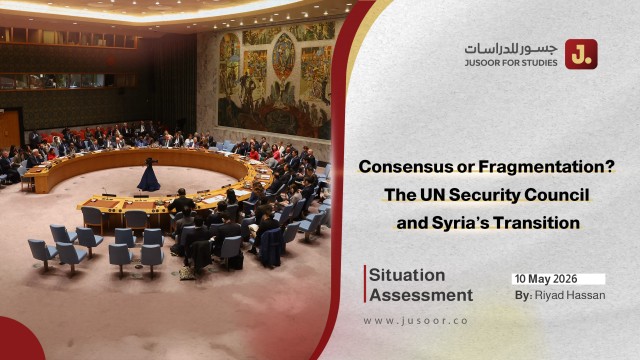
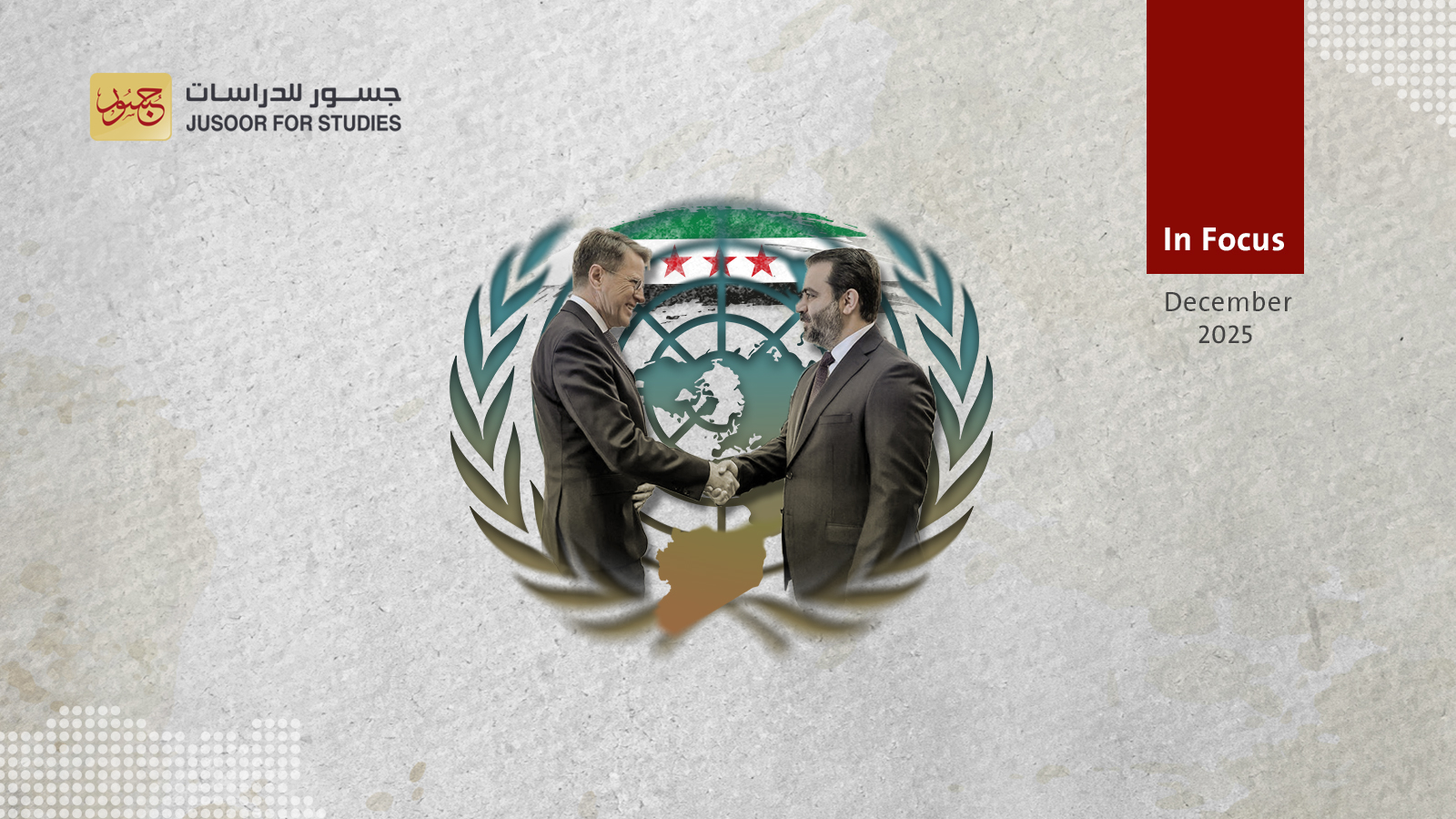
A delegation from the United Nations Security Council visited Syria on December 4 to assess the situation there and examine how the UN will operate in the country, a year after the fall of the Assad regime.
This mission, led by Council President Samuel Žbogar, followed two previous trips commissioned by the UN Secretary-General, with the same task. The first, in April, was led by Under-Secretary-General for Political and Peacebuilding Affairs Rosemary DiCarlo and a working group tasked with conducting a comprehensive strategic assessment of the situation in the country.
The second, in May, was led by Darko Mocibob, Director of the Middle East Division at the UN’s Departments of Political/Peacebuilding and Peace Operations. It included a strategic assessment team to review the findings and recommendations of the first mission. The Secretary-General submitted its report to Security Council member states in June 2025, along with his final recommendations for the UN’s role in Syria’s future in light of the transformation gripping the country.
The Security Council struggled to reach agreement on the findings of the report, as well as on the Secretary-General’s recommendations, despite repeated discussion of the subject—especially by the U.S.—at monthly meetings dedicated to political and humanitarian affairs in Syria.
The disagreement, which involved all five permanent members of the Council, was evident in China’s abstention from voting on Resolution 2799 (2025), which called for Syrian President Ahmad al-Sharaa and his foreign minister, Anas Khatib, to be removed from UN sanctions lists. The depth of the disagreement was also on show during the review and amendments to the draft resolution submitted by the U.S. to the General Assembly, which welcomed elections to the Syrian People’s Assembly.
Anticipating disagreements over Syria, the Secretary-General limited himself to making a recommendation aimed at garnering a minimum level of consensus: that of moving his Special Envoy’s Syria office from Geneva to Damascus. In August, he sent a letter to the Syrian government seeking its approval for the step. His initiative appears to have been primarily in response to American wishes, as it would allow the U.S. envoy to play a greater role in overseeing the transition process in Syria.
It also appears that the Security Council’s decision to visit Damascus stemmed from its rejection of this recommendation. It opted instead to assess the situation directly through the Council’s mission, rather than building on the reports of the two previous missions. Sources who attended its meetings in Damascus indicate that its assessment of the political, humanitarian, and security situation was not positive.
With all this in mind, there are four likely scenarios as the UN Security Council decides on the future role of the UN in Syria:
• The establishment of a UN mission to oversee the political transition, bringing together all UN missions and international commissions of inquiry under a single leadership for better coordination and implementation of the UN’s Transitional Action Plan. However, the establishment of such missions is sometimes subject to Chapter VII of the UN Charter, as was the case with the mission to Libya, pursuant to Resolution 2009 (2011). Issuing a resolution under Chapter VII—which grants the UN Security Council power to enforce decisions in cases of threat to global peace—would greatly complicate the situation in Syria. In particular, it would bolster the intransigence of factions such as the Syrian Democratic Forces in northeastern Syria and the Druze militia of Hikmat al-Hajri in Suwayda; it could also encourage remnants of the former regime in the coastal region to stage another rebellion. These risks mean the Council is unlikely to pursue this option.
• Issuing a new Security Council resolution to replace Resolution 2254 (2015), reflecting the changes that have taken place in Syria since the fall of the Assad regime. The council may struggle to reach agreement on such a resolution, due to diverging assessments of the steps involved in the political transition, domestic divisions and the Syrian government’s ability to resolve them, the government’s fulfillment of its commitments in the fight against terrorism, and the handling of foreign fighters.
• Support for the Secretary-General’s recommendation to move the Office of the Special Envoy for Syria from Geneva to Damascus, which remains a possibility if Council members can reach a modicum of consensus. However, the Secretary-General’s decision to appoint Italian Claudio Cordone as the new Deputy Special Envoy, replacing Najat Rochdi, before a decision was made to appoint a new Special Envoy in the position of Geir Pedersen, suggests that there is disagreement over the name, status and duties of the new envoy.
• Changing the status of the envoy from Special Envoy of the UN Secretary-General to Special Coordinator of the United Nations, expanding the powers of the post to include all UN institutions in Syria, including the UNDOF forces monitoring the 1974 disengagement agreement between Syria and Israel. Such a strategy could also include assigning it additional tasks outside the framework of Resolution 2254 (2015), such as coordinating the work of the UN team with the Syrian government, donor countries, and international financial institutions. It could also be charged to work with the government and other relevant Syrian actors to form the national and local institutions necessary for governance, strengthen the protection of human rights, and facilitate the return of refugees, displaced persons, and internally displaced persons.
In conclusion, the Security Council mission’s third visit to Syria, intended to complete its assessment of the situation in the country,is likely to result either in endorsement of the Secretary-General’s recommendation to move the envoy’s office to Damascus or a decision to change the envoy’s status to that of a UN special coordinator. The latter is one option that Russia may be willing to accept, despite its objections to the work of some investigative committees and its challenges to their mandates, such as those of the Organization for the Prohibition of Chemical Weapons and of domestic committees investigating human rights violations, which have been active for a year along with similar Syrian institutions as the Syrian government’s seeks bring these subjects under a national, rather than international, umbrella.