Visa and Mastercard Fuel Syria’s Financial Integration Drive
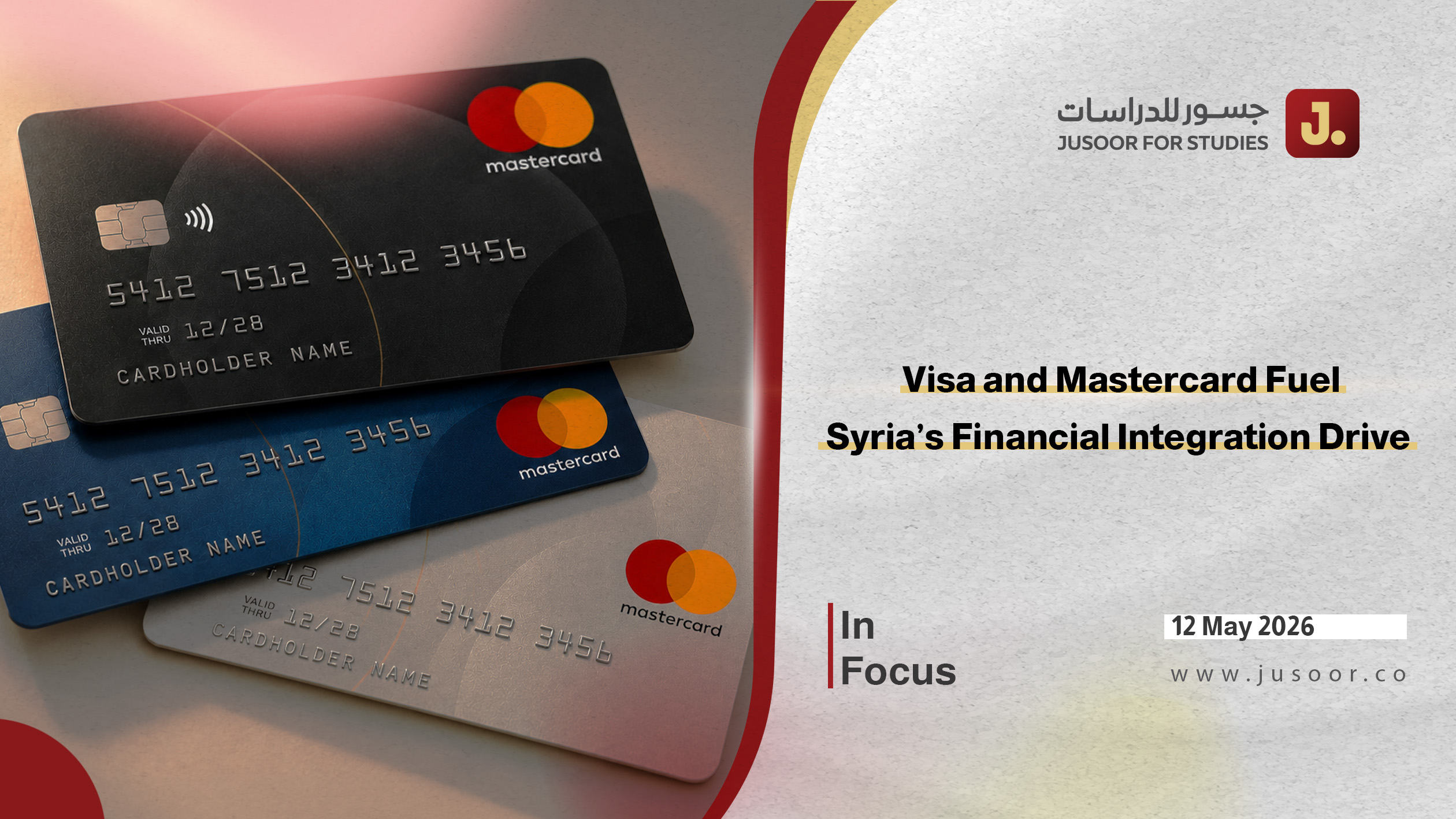
On May 4, the Central Bank of Syria issued a decision allowing licensed banks and electronic payment companies operating in the country to deal with international electronic payment companies such as Visa and Mastercard. This marks a key step in the transformation of the Syrian financial sector since the fall of the Assad regime, going beyond facilitating traditional payments and aiming gradually to reconnect Syria to the international payments system.
Mastercard then announced on May 7 that it was technically ready to process international card transactions within Syria. Two days after that, the Ministry of Communications and Technology launched the first trial of an electronic payment transaction via Visa and Mastercard’s global networks. It did so at an official ceremony, also announcing the launch of the first local payment network, “Paymera,” which is linked to global electronic payment networks.
These steps in the digital transformation of the Syrian financial sector follow from a series of agreements in 2025. Most prominent was a September agreement between the Central Bank of Syria and Mastercard to develop the country’s digital payment infrastructure and promote financial inclusion. The Bank and the Ministry of Communications had also agreed in July to cooperate on developing digital financial services. Qatar National Bank (QNB Group) was among the first banks to begin offering digital payment services and accepting international cards within Syria.
The Syrian government has already begun moving to facilitate electronic payments through digitization. The Central Bank’s 2026-2030 strategy aims to strengthen financial and monetary stability and to build a modern financial system that keeps pace with international developments, through a reliable monetary policy, a reliable banking system, and secure digital payments.
The electronic payment system faces several challenges related to the level of trust in the Syrian banking sector after years of isolation, sanctions, and restrictions on financial transfers. The success of the steps described above is also contingent on the government’s ability to implement broader banking and monetary reforms, alongside efforts to reintegrate Syria into the global financial system, enhance its standards of transparency and financial oversight, and reform its telecommunications infrastructure.
Furthermore, the success of the government’s electronic payment system initiatives depends on a number of technical and institutional factors, most notably the stability of its telecommunications infrastructure; the ability of Syrian banks to complete their integration with international financial transfer systems; the development of the legislative and regulatory environment for electronic transactions, digital signatures, and financial data protection; and the training of personnel to address cybersecurity risks and promote the adoption and importance of electronic payments across various economic sectors.
The Syrian government is keen to make the electronic payment system a success, 18 months after the fall of the Assad regime, as this could help strengthen government oversight of financial transactions and curb smuggling and other illicit activities. However, these efforts are still in their initial, experimental phase.
Yet moves to attract companies like Visa and Mastercard to Syria indicate a broader Syrian government effort to rebuild financial channels with the outside world. This will require it to strengthening compliance with transparency and anti-money laundering standards set by the global Financial Action Task Force (FATF). This in turn could also help improve Syria’s climate for foreign investment. All this is underway in parallel with the creation of a more open economic environment for the digital economy, despite the continued challenges related to the banking and legislative structure and economic confidence.