The Road to Abolishing the Caesar Act
On November 6, U.S. Secretary of State Marco Rubio suspended sanctions on Syria under the Caesar Act for 180 days. As his department later explained, the decision—which does not apply to transactions involving Russia and Iran—was based on the Syrian government’s actions since taking power following the fall of the Assad regime.
The State Department issued its decision on the same day that the UN Security Council adopted Resolution 2799, removing Syrian President Ahmed al-Sharaa and Interior Minister Anas Khattab from a sanctions list targeting Islamic State group and al-Qaeda operatives.
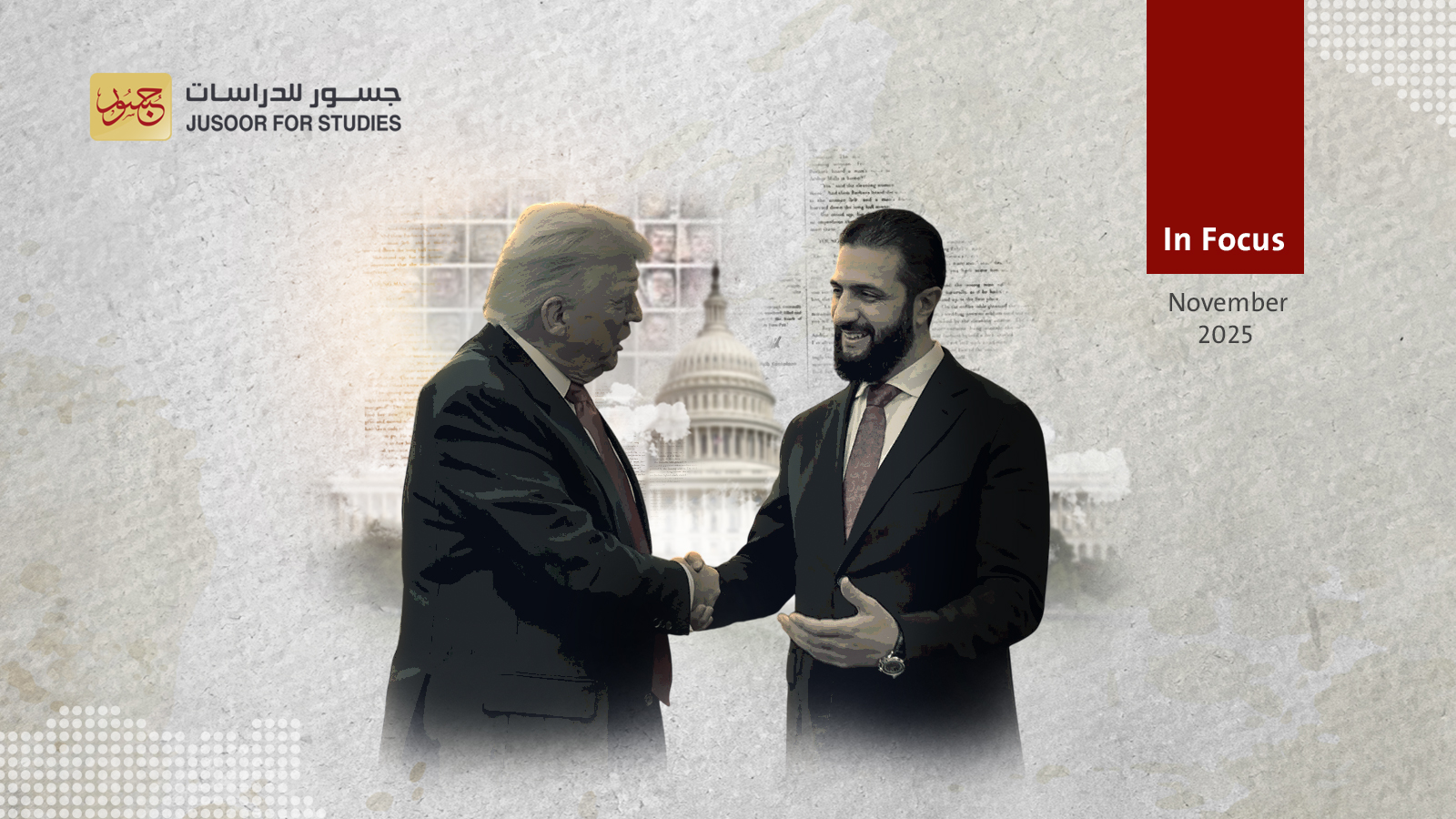
Soon after meeting Al-Sharaa in Riyadh in May, President Donald Trump had instructed Rubio to review the Syrian government’s progress and assess whether it met the criteria set by the Caesar Act (officially the Syria Civilian Protection Act of 2019) for the suspension or lifting of those sanctions.
Those criteria include Damascus fulfilling its obligations to cease the development, production, stockpiling, and use of chemical weapons and to destroy existing stockpiles; taking steps to hold perpetrators of war crimes in Syria accountable; providing redress for victims of war crimes committed by the Assad regime; allowing for the safe, dignified, and voluntary return of displaced persons; and making tangible progress toward becoming a signatory to the Chemical Weapons Convention (CWC).
The suspension therefore came after Trump’s approval, based on Rubio’s review, which stated that the Syrian government had met those criteria. This followed a series of U.S. government steps to ease sanctions on Syria, beginning on June 30, when Trump waived the application of the Syria Accountability Act, thereby easing export controls and facilitating trade and economic development for the benefit of the Syrian people.
On July 8, the Secretary of State rescinded the designation of Jabhat al-Nusra (Hayat Tahrir al-Sham) as a foreign terrorist organization. As of July 20, he waived restrictions stipulated in the Chemical and Biological Weapons Act on foreign assistance to Syria, particularly financial assistance. In September, the U.S. Department of Commerce decided to ease licensing requirements for dual-use exports to Syria; then on November 7, the U.S. removed President al-Sharaa and Interior Minister Anas Hassan Khattab from the list of Specially Designated Global Terrorists.
Despite these moves, the Caesar Act stipulates that any sanctions that are suspended based on the Syrian government’s compliance with the relevant criteria must be reinstated if the U.S. president determines that those criteria are no longer met. There are precedents for this, such as in the cases of sanctions against Cuba and North Korea.
There is a fundamental difference between a decision to suspend sanctions against Syria and a decision to lift them in full and permanently remove the country from the U.S. blacklist of state sponsors of terrorism. Suspension requires the president to certify to Congress that the Syrian government has not supported international terrorism for the past six months, along with assurances that it will not resume such support in the future. This is precisely what happened, according to Rubio’s review.
Conversely, Syria’s definitive removal from the list of state sponsors of terrorism would require the president to certify before Congress that a “fundamental change” had taken place in the Syrian government, demonstrating that it is no longer involved in any form of terrorist activity. Furthermore, Syria must provide the U.S. with assurances that it will not engage in terrorist activities again.
So far, there is no precedent for reimposing sanctions on a country removed under the “fundamental change” clause; doing so would be subject to numerous, complex obstacles and procedures, comparable to those encountered when the sanctions were initially imposed.
Activating the “fundamental change” clause is not out of the question, especially since President al-Sharaa’s visit to the White House and the official announcement that Syria would join the international coalition against IS. Yet whether or not this will happen depends on two main issues: regional security agreements, and the peaceful resolution of Syria’s domestic conflicts in a way that preserves the rights of all of Syria’s communities and guarantees their genuine participation in governance.