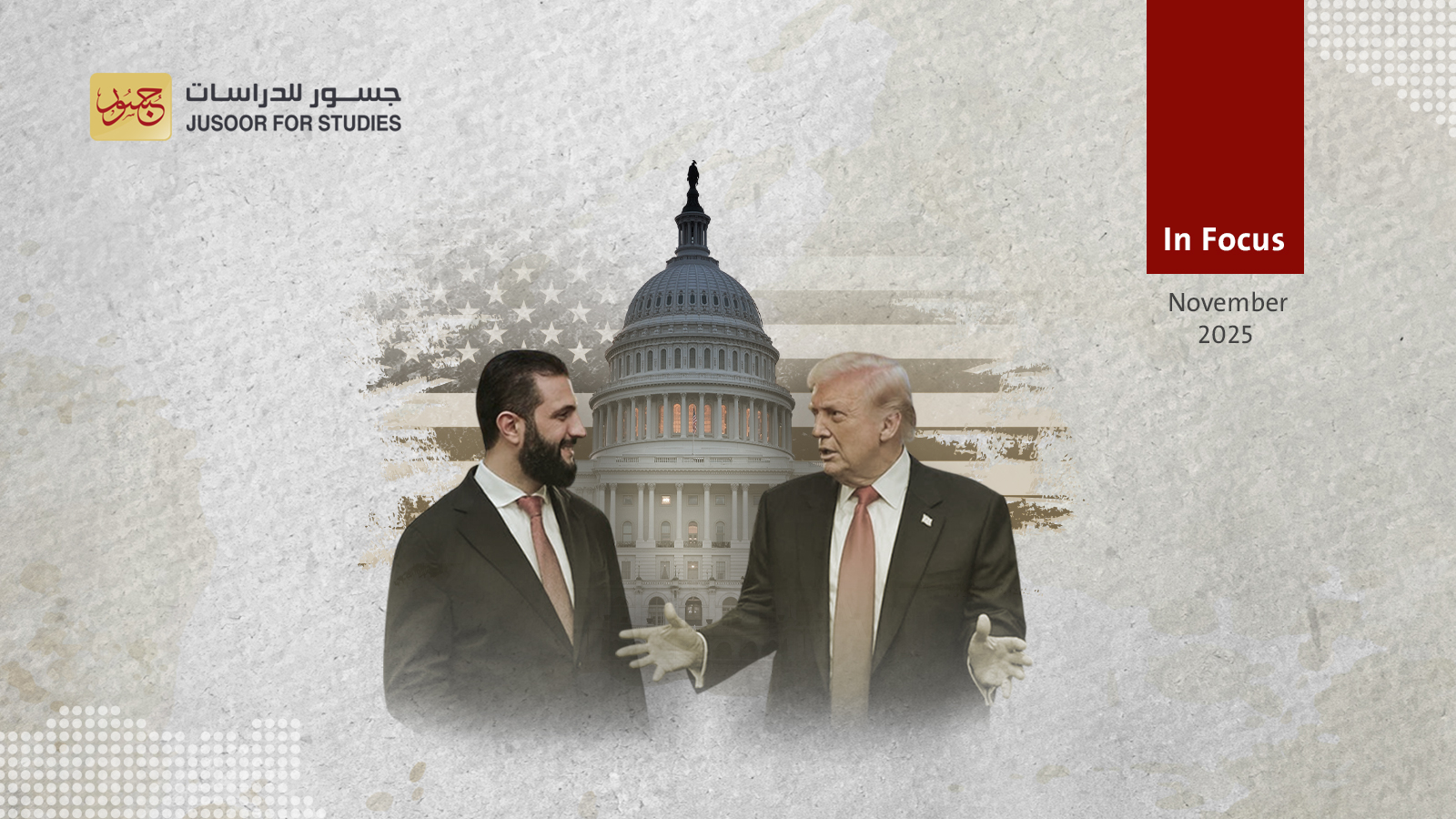
Will Al-Sharaa’s U.S. Visit Secure Israeli, SDF Concessions?
Syrian President Ahmed al-Sharaa paid a historic visit to the White House on November 11, the first official visit by a Syrian leader since the country’s independence in 1946. His meeting with his American counterpart Donald Trump—their third, following sit-downs in Riyadh and New York—had produced results even before it began.
The U.S. preempted his trip by pushing through a resolution at the UN Security Council to lift the world body’s sanctions against Al-Sharaa and Syrian Interior Minister Anas Khattab. Washington also suspended sanctions under the Caesar Syria Civilian Protection Act of 2019 for 180 days, and submitted a draft resolution UN General Assembly resolution welcoming the results of elections to Syria’s parliament.
During the visit, the U.S. lifted all legal measures previously imposed on the Syrian mission and the Syrian embassy in Washington, while Damascus officially became the 90 th member of the Global Coalition Against Daesh.
Here is a summary of the key outcomes of Al-Sharaa’s visit to the White House:
• The U.S. is expected to remove Syria from its list of state sponsors of terrorism at the earliest opportunity, ending the longest-standing inclusion of a country on the list, which has featured Syria since 1979. This will have direct and immediate economic and financial repercussions, along with the lifting of restrictions on American and international companies and banks, as it will allow their return to Syrian markets. It will also have political and diplomatic implications, leading to greater recognition of the Syrian government and the removal of restrictions on dealings with it. Finally, it will have military repercussions, including the lifting of restrictions on arms supplies to Syria.
• The U.S. is expected to lift its sanctions on Syria in full. However, this process is likely to last years, and will be contingent on Damascus meeting several U.S. demands. These include engaging in regional security agreements, continuing to keep Iran and its proxies out of the country, ensuring the complete elimination of chemical weapons, combating drug trafficking, resolving the issue of foreign fighters, and addressing human rights, particularly those of Syria’s minorities.
• The implementation of the March 10 agreement between the Syrian government and the Syrian Democratic Forces (SDF) is expected to accelerate, with U.S. facilitation, now that both parties have become partners in the International Coalition. This could help prevent future clashes between government and SDF forces. Furthermore, the integration of the latter into the regular Syrian military could mean see them given a primary role within the Coalition, as compared to government forces. This would alleviate pressure on Damascus and reduce concerns about internal divisions arising from joining the coalition.
• President Donald Trump is expected to pressure Israeli Prime Minister Benjamin Netanyahu to abandon his stated position and accept a security agreement with Syria, potentially similar to the one reached in Gaza. Such an agreement would establish an international stabilization force comprised of Russian, Turkish, and Syrian troops, who would gradually replace Israeli forces in areas the latter seized after the fall of the Assad regime. This force would operate alongside the United Nations Disengagement Observer Force (UNDOF) to monitor the ceasefire agreement, ensure the absence of armed militias south of Damascus, assist in training Syrian police and security forces in maintaining order and protecting civilians, and help secure humanitarian corridors to areas affected by the violence in the province of Suwayda.
Israel has expressed its displeasure with al-Sharaa’s visit to the White House, repeatedly and flatly refusing to withdraw from the occupied Syrian Golan Heights and the new areas it seized after the fall of the Assad regime. It has also demanded that southern Damascus be demilitarized and placed under a no-fly zone, and that a security agreement be established to replace the 1974 Disengagement Agreement signed in the wake of the Yom Kippur war.
Finally, a security agreement between Syria and Israel, which is clearly seeking to obstruct efforts toward such a deal, could be one of the most significant outcomes of al-Sharaa’s visit to the White House. Such an agreement would not be bilateral, but would extend to become an essential component of a broader agreement aimed at establishing stability throughout the region.
It would contribute to weakening Iran and Hezbollah in Lebanon, enabling the Lebanese state to implement its decision to disarm Hezbollah. This could allow Beirut to join the regional security agreements over which Hezbollah refuses to negotiate.